All Categories
Featured
Strategic Arbor Management for Resilient Educational Inst...

Identifying Vulnerabilities in Your Commercial Irrigation...

Urgent Arborist Services Across SoCal
Table of Contents
Finding ways to conserve water has ended up being essential for our survival. With some states suffering from dry spell, water conservation is exceptionally beneficial. Source: Getty ImagesArticle continues listed below advertisement According to the University of Massachusetts Amherst, one approach of landscaping that may assist save water is referred to as "xeriscaping." This is used to help create "unified yet water-efficient landscapes" and involves 7 basic actions.
Article continues below advertisementSource: Getty Images: You may improve soil structure by including garden compost, decayed leaves, or manure.: Using drought-tolerant yards can help in water conservation. In addition, prevent using isolated strips of grass as it can lose water.: Making use of natural mulches can reduce water evaporation from the soil and limitation weed development, which may compete for resources alongside your plants and yard.
It is very important to make sure your system lines up with the requirements of the plants. Source: Getty ImagesArticle continues below ad: Regularly weed and prune your landscape.: Examine your landscape and choice plants that have less of a need for water, such as drought-tolerant plants. Aside from utilizing the approach referred to as xeriscaping, a 2015 post by Oregon State University recommends you must water your plants at night or in the morning since "less water is lost to evaporation early and late in the day when temperature levels are lower."The article also specified that you must delay planting brand-new plantings during a dry spell to help conserve water due to the fact that new plants require more water, due to the root systems being shallow.
Your Proven Guide to Industrial Landscape Upkeep
You can gather runoff rainwater utilizing a big tank, which you can utilize to water your plants. In general, these simple strategies will assist you to save water, and might even save you a little cash, too.
WaterSense, a program sponsored by the U.S. Epa, assists house owners and businesses enhance water performance and lower expenses by promoting high-performing, water-efficient irrigation technologies and simple pointers for the home and garden. Having a beautiful landscape does not need to imply losing water or money. WaterSense takes a few of the uncertainty out of watering your backyard by making it simple to discover water-efficient technologies and services.
Weather-based irrigation controllers, for example, use local weather condition data to figure out when and how much to water. Irrigation products that bear the WaterSense label have been independently accredited to fulfill EPA's requirements for water performance and high efficiency. Residences with automatic watering systems can use about 50 percent more water than those without them.
Offer benefit. Meet plants' water requires while supporting a healthy landscape. Be sure to ask your irrigation professional about WaterSense labeled elements offered for your outdoor watering system. And even more importantly, carry out regular checks and maintenance of your system to guarantee ongoing water performance. Even with the smartest irrigation innovations, WaterSense recommends seeking advice from an expert certified in waterefficient strategies and practices before setting up or making changes to your system.
Specialized Arborist for Healthcare Facilities
Did you know that 30 percent of the water utilized by the average American home is committed to outside water use? In some parts of the nation, homeowners use as much as 60 percent of their water outdoors.
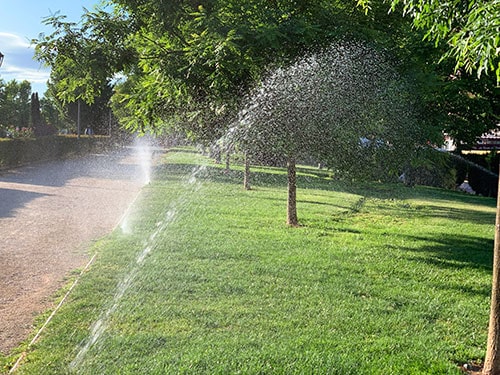
Change a basic clock timer with a WaterSense identified irrigation controller on a moderate-sized yard to save about 24 gallons of water each day. Watering system maintenance differs depending on the system, but it is constantly a great idea to inspect your system month-to-month to prevent leaks, broken or blocked heads, and other issues.
Mulch around shrubs and plants can minimize weeds, keep water where needed, and feed the plants as it disintegrates. To reduce water waste from wind and evaporation, avoid watering during the mid-day sun or when it's windy. Yard doesn't need to be watered every day; action on the yard, and if the lawn springs back, it does not require water.
Securing Commercial Gardens With 2026 Technology
As property owners, we often take pride in our lush gardens and well-manicured landscapes. Preserving these outdoor spaces can be water-intensive, and in an era where water conservation is essential, it's vital to discover ways to lessen water usage without compromising the appeal of your garden.

Latest Posts
Ensuring Longevity Through Proactive Arborist Support
Planning High-Efficiency Irrigation Frameworks
Strategic Arbor Management for Resilient Educational Institutions